The greatest mistake you can make in life is to be continually afraid of making one.
Elbert Hubbard
You expand your capacities by doing. Think of your ability as a point; that dot can only expand outward toward your potential if you do something new or do more. Staying in your comfort zone keeps you from growing as a person. Experience develops you because you grow by first acting, then learning from your mistakes, and improving through trial and error.
The most regrettable thing is an intelligence that is afraid of being tested because it doubts itself, or holds high expectations of its owns capacities and despairs of perfection. Such a mind will resist learning and growth for fear of making the very mistakes that will grow it. Children can make mistakes without feeling embarrassed by them but that gets socialised out of them by adolescence.
Your intelligence is no use to you if you are afraid of testing it against the very challenges it would assist you in overcoming. To learn anything, to develop a capacity or expand an ability, you must risk seeming foolish. To grow into your potential as a person, you have to be comfortable with appearing ridiculous because that’s how you will seem to the people who see you making mistakes.
Making mistakes is necessary because mistakes themselves are apt to teach you lessons. If it is true that you don’t know French this will be apparent when you attempt to speak it because you will make a catalogue of errors. Assuming you learn from them, the more mistakes you make the closer you’ll get to fluency. All your mistakes do is reorient you with respect to where you stand in your journey to fluency. They tell you exactly what needs work and what needs to change if you are to make progress toward your destination. Consequently, it would be counterproductive to shy away from making mistakes. Rather we must seek them out because they hold within them an opportunity for learning that we would do well to heed and take advantage of in pursuit of our goal.
Taking self-development seriously requires that you cease caring about impressing others. Often doing the thing that will help you to improve will make you seem ridiculous. To learn you have to be willing to make a fool of yourself, to go through a process of trial and error, correcting your mistakes as you improve. No one’s approval should matter more to you than your own personal growth. Don’t let a concern for the impression you are making get in the way of your progress. You lose everything in seeking to gain the esteem of others, they have already sacrificed their futures for acceptance.
Most of us struggle to be productive or feel like we could be doing more with our time. Getting things done is at the forefront of our minds and yet keeping busy all day still leaves us feeling we could use our time better. However, this is a flawed way of thinking about productivity. Time management and productivity are conflated. It’s not about managing time. Yet many fall into the time management trap, where the more focused you are on managing time the harder it is to control. Managing time is impossible so escaping the trap requires that we look for alternative ways of managing our productivity. Our focus shouldn’t be on time but on managing the things that are within our control. To improve productivity you don’t need time management. You need to manage your choices, attention, energy, attitude, habits, knowledge, emotions and yourself. Managing the first five is necessary but not sufficient for productivity. That is, it is possible to be productive without struggling against yourself, but often you will have to overcome your desires (to procrastinate or be lazy) to move toward achieving your goals.
How to Increase Productivity 8 things that need to be managed: 1) Choice management – making the right choices given our goals and self-knowledge 2) Attention management – directing your attention toward your chosen activity 3) Energy management – managing energy levels so you can undertake your activity efficiently 4) Attitude management – holding the right attitude toward carrying out your task 5) Habit management – developing the habits that will keep you consistent in the long run 6) Knowledge management – keep all of your knowledge organised and ready to hand so you can leverage what you know to achieve your goals 7) Emotion management – keeping control of your emotions is essential to getting things done (anxiety can prevent us starting) 8) Self-management – applying enough self-control to actually do what you need to do when wanting to do it isn’t enough (when perfectionism/procrastination get in the way)
Our time is not something that it is possible to manage if by that we mean that we should be in charge of it. We all have the same number of hours in a day and, given our commitments, our time is not always completely in our control. The only thing we can do is manage how we work within the time we have left over. That is, when we talk of ‘managing’ time we mean using it sensibly, given what we want to achieve. To work effectively within the time we have and be productive when it comes to our overarching goals it is necessary for us to make the right choices, pay attention to our chosen activity, have enough energy to undertake it, show the right attitude, develop the habits that keep us consistent in moving toward our goals, organise our knowledge in such a way that we can leverage what we have learnt to achieve them, overcome emotions that prevent us from working and apply enough self-control to do what we need to do when we don’t want to. Until we manage all these things it will always seem to us that our time is running away even if we are keeping busy and working all day, because we will nevertheless fail to be productive if we don’t manage these things. It’s not that we don’t have enough time, or even that we don’t use it, it’s that we fail to use it well on account of our mistakes in these areas. We struggle to use our time for the activities we want to use it for because of a mismanagement of these other things.
Managing our choices, attention, energy, attitude, habits, knowledge, emotions and ourselves will allow us to use our time more productively than if we tried to do the same activity without having considered how well adjusted we are in each domain. For, if we don’t manage these things, our time is wasted on us because we won’t be disposed toward using it well until we get these others things in check. Managing these things is a precondition of ‘using’ our time well. To the extent that we fail to we are necessarily less productive than we could be. In their absence we can’t get anything done. It seems to me that saying that we need to ‘manage’ our time is a misnomer because time itself is beyond management. We can categorise it into minutes, hours and days but that doesn’t change its fundamental nature. We have no control over the fact of times passage so we cannot be in charge of it. However, we can reorient ourselves by focusing on using our time well by managing other things that are within our control. Comporting ourselves toward managing these will help us to do whatever it is that we want to do much more effectively. In managing all these things we make it the case that we will use our time well, assuming we are right that the goal we are pursuing is appropriate to us given our self-knowledge. ‘Time Management’ gives us the wrong idea, we have to manage other things before it becomes possible for us to ‘use’ the time we have well. Time is just the space in which all our work happens to get done so we come to see it as valuable in itself, when what matters crucially is what we do in that time, not time itself. All that counts is whether we use our abilities and capacities to achieve our goals.
If we say that we used our time well we mean that, in a certain period of time, we did something that we found meaningful. The time itself isn’t being managed, our choices are leading to actions and behaviours and consequently, results, that we deem meaningful. If we say we wasted our time by relaxing all we mean is that our actions and behaviour in that time period were incongruous with our self-chosen goals. In both cases, our choice management is relevant, we manage it well in the former case but mismanage it in the latter case. Someone else who did exactly what we did might not think they wasted their time if they chose to relax. Whether or not time is used well or wasted turns on what the person wants to use that time for, so in reality it comes down to something else like our choices. Time is ‘wasted’ if we regret our choice. To regret is to prefer to have chosen otherwise. If our choice is right for us we will not regret it and our time will have been ‘used’ well.
Comparisons are drawn between time and money and what it is spent on is only productive insofar as it is an activity that an individual values. In either case, whether we talk of money or time, what it is spent toward determines whether it has been used well. It is not money or time that has subjective value, but the things and activities we use them on. Money has objective value in a society to the extent that it is the currency needed to buy necessities. Time seemingly has objective value in that the temporal dimension is the dimension of spacetime across which we live our lives and pursue our goals. People will always have time in which to pursue their goals, you start with a lifetime and lose time as you go along, but not everyone starts with money and has some left over to waste. Hence, while not spending money is saving, not spending time is ‘wasting’ it. That is, we can possess the former physically and amass it but we cannot try to hold onto the latter without it eluding us and drifting further away. The more strongly we try to hold onto time, the less we use it and the more we ‘waste’ it because the things we spend our time doing are what ‘use’ it up. Moreover, we feel that we have ‘wasted’ time when we use it as well. The more engaged we are in something the quicker our perception of time’s passage. That is, the more focused we are on something the faster time will seem to waste away. Yet this is illusory. After all, even while we are being productive it can feel like time management is beyond us because time is not something we can grip.
Time is a concept rather than an object like money. We might set aside a certain amount of time, say an hour, to get a certain amount of work done but if we fail to complete it we feel we have ‘mismanaged’ our time when really we had failed to manage something else like our attention (by getting distracted), energy (if we are tired), attitude (if we are unmotivated) or ourselves (if we lack the self-control necessary to complete our task). Time itself cannot be wasted but our abilities and potential can be wasted if these things aren’t managed and failing to act and pursue our goals across the temporal dimension would still qualify as ‘wasting time’ because our lifetime is constituted by an indeterminate amount of time. Even though someone else may do the same thing and not feel they misused time we would feel we have wasted our lives if we did not develop our abilities and grow into our potential by choosing the activities most important to us and pursuing them across our lives. Practicing what we love will improve our work and make us more ‘talented’ at that activity, whatever it may be. The goal then is not to think about how to spend time most wisely, but simply to fill our days with productive work directed at our ultimate goals.
Time slips through our fingers
Time itself is intangible, impossible to grasp, it is not an object but a concept and in reaching for it we find that it will always elude physical reality. What is objectively real and therefore amenable to change or use/misuse, is our ability and potential, our capacity to achieve things that we choose to do. Whether or not our actions move us toward our goals does not tell us how well we are using time, it only tells us how successful our actions are in helping us to achieve them within the temporal dimension, which we cannot escape. That everything happens across time does not mean that time itself is being spent or wasted by us, we do not possess it. When we say we have time, that is as meaningful as saying we have space. Space and time do not belong to us, we just happen to exist in spacetime. All we own is ourselves and all we have control over is what we do so, given that we cannot choose how much time we have over our lifetime to do what we want to do, all that remains in our volition is the ability to choose how we behave and act in relation to our goals. Therefore, we should focus on the things in ourselves that we can and need to manage rather than time, which cannot itself be managed. The intangible is beyond management. You can’t hold onto time anymore than you can hold onto space. You can, however, manage yourself.
It is not the man who has too little, but the man who craves more, that is poor
Seneca
The Consumer
Many of us buy into the idea that the richer we become and the more things we can get, the happier we will be. Yet, everytime we finally get a hold of that one thing which we were certain would change our life, once it is no longer new, it falls down in our estimation to become just like all our other possessions. What seemed so enticing to us, what we were certain we could not live without, loses its pull the moment it comes into our hands. For a while we may cherish it but there will inevitably come a time when it no longer attracts us, and another thing we don’t have will catch our eye. This cycle repeats incessantly so that each time we gratify our desire, soon another will take its place. Until we can escape the need for more we will never be satisfied, because what we own will never be enough.
In the west, in our consumerist culture, this chronic dissatisfaction usually lasts a lifetime. Few even recognise the trick they play on themselves, and those that do rarely overcome their own addiction to buying what they have no need of. The fact is that it feels good when they get themselves what they covet, it is only much later that what they had their eye on becomes just another thing they possess, at which point they will seek yet another object to lust after. In this way, most of us continue to purchase the things we assume will make us happy, and never learn to be satisfied with what is ours now. In our society it seems that being grateful is a sin, for each day we are reminded by the media that the thing we don’t have is the very thing we need. These messages convince us that our happiness is to be found in material things, especially the ones that we don’t own, so that we feel compelled to go after them in order to fill our lack.
Nevertheless, it does not matter what we get, however valuable it might be. If we rely on getting more things to feel happy sustaining this feeling will mean there will always be one more thing that we need to get. As much as we try to convince ourselves that it will be the last time we spend carelessly, that it is the only thing we need, this habit of buying will continue because there will never come a point at which we will be satisfied. That was denied us the moment we failed to be satisfied with what we have now, because until we learn to be, there will always be one more thing that we ‘need’ and the project will go on to infinity.
How many times do you recall being truly satisfied with what you have, not wanting more? Until we no longer need more to feel better about ourselves and our lives, there can never be happiness without constant spending. Only by being content with our lot, whatever it may be, can we begin to be rich in possessions. Indeed, it can be argued that wealth is a relative notion, that depends on how satisfied a person is with what they own. That is, the rich man would be the one who is satisfied with his possessions, who feels he has more than enough to be happy. Having a great deal of money and assets relative to our needs would then be enough to be wealthy. The poor man would be the one who is dissatisfied with his lot, who feels he needs more to be happy. Generally, someone is poor if they do not have enough to live comfortably in society. But this depends on their own view of their situation such that even if they have little, but can live on it and remain satisfied, they are happier with their situation than some ‘rich’ people that feel they need a bigger house to find happiness. Of course, this means that to be rich is to be satisfied with what you have, while to be poor is to crave more such that whatever our physical wealth might be, until we overcome the need for more we remain beggars.
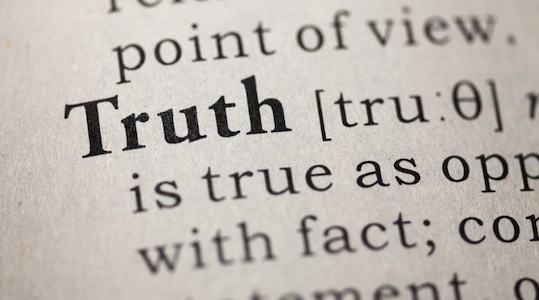
Truth is a pathless land. You have your way and I have mine – as for the correct way, it does not exist. The way of life we choose is our own affair and there is no objective duty to which it must tend. There is no fundamental meaning which we can all live by; truth is a lie, an illusion each prophet claims to possess. We look to them for answers they cannot give – the truth we affirm must be uniquely our own. Until we realise that no one is coming to save us, that this life is our own to shape, we will continue to look outside of ourselves for redemption. However, it is our responsibility to create our own meaning, to find our own truth so that this life can be experienced fully on our terms. Everything is within, there is nothing outside of us that could give us purpose. Thinking for oneself is the only way to discover our reason for living.




 🄰🄳🄸
🄰🄳🄸 