UN needs a proactive UK to usher in a brave new world

Nations need to unite to find strength in numbers against imperial powers. How can the UK lead calls for international cooperation and figurehead a united front?   

The UK’s role in the future UN

Since World War 2 the UN has called for global cooperation and peace-making but today it is at breaking point, facing the risk of financial collapse. Most don’t live that long so while George Robertson, new chair of the International Relations and Defence Committee said ‘the UN is our vehicle for optimism’ it is running on fumes. 

Exactly 80 years after the UN general assembly first convened in London on 17th January the UN Secretary General António Guterres took to the stage to speak up for multilateralism in an increasingly divided world. In his speech the representative of the UK government Attorney General, Richard Hermer KC, said that the UK’s commitment to the organisation’s founding principles is as strong now as it was then.  But when rogue states are breaking the rules-based international system and the security council is held hostage by powerful nations, how can the UK help the UN. 

United Nations General Assembly 80th anniversary event

In this upside-down world the US-led ‘Board of Peace’ filled with the dictators and war criminals standing in opposition to the UN started another war in the Middle East. When I asked Jeremy Corbyn about the ‘Board of Peace’ he said that they are ‘trying to assemble their own world order.’ 
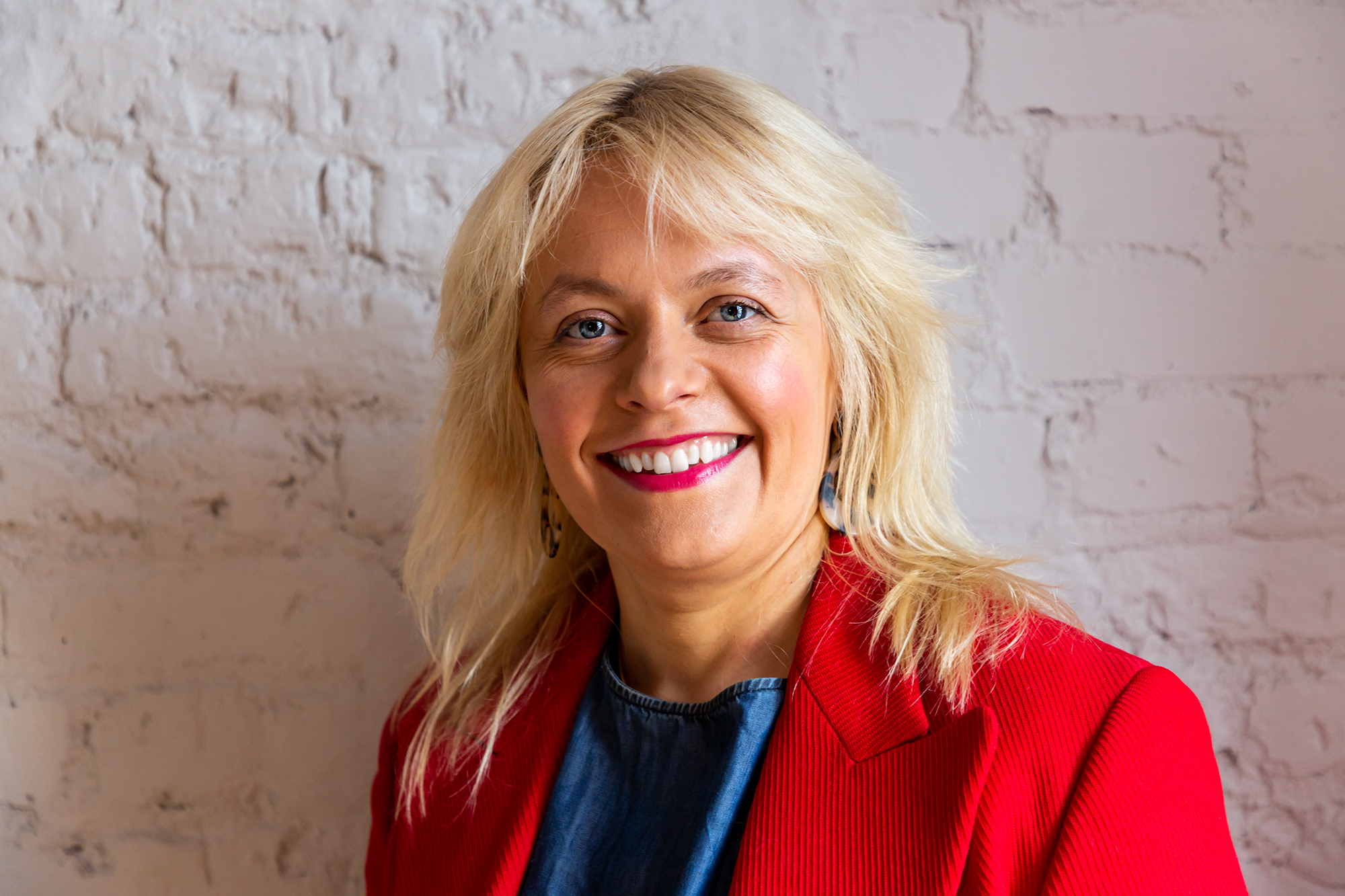
Jane Kinninmont Credit: UNEP/Cyril Villemain

Jane Kinninmont, CEO of the United Nations Associations of the UK (UNA-UK) said: ‘The ‘Board of Peace’ needs to be taken seriously because it’s one of the symptoms of a dramatic change underway in world politics. The US really wants to walk away from its previous role in the multilateral system. It’s not just about the Trump administration, we have seen an erosion of international law for quite some time and it’s speeding up now.’

It is deeply problematic because it is a mechanism that the US might use to bypass the UN. ‘There is an onus on the UN and the countries that support it to reclaim their role in peace-making. It’s not easy but everyone who wants to protect the UN needs to make it better.’

Hassan Damluji, senior fellow in international relations at the London School of Economics (LSE), explained that the UK’s best bet is to join a middle-power alliance: ‘We can’t do it on our own and even as a group of middle powers we can’t fully rebuild multilateralism.’ 

Nevertheless, alongside others the UK can show imperial powers like the US that it’s not in their interest to destroy the international order. If the UK build an alliance of significant countries in the global north and south it would show America the only way to win back their influence ‘is to join us and make it more than a middle power alliance but actually a restored global system under the UN.’ 
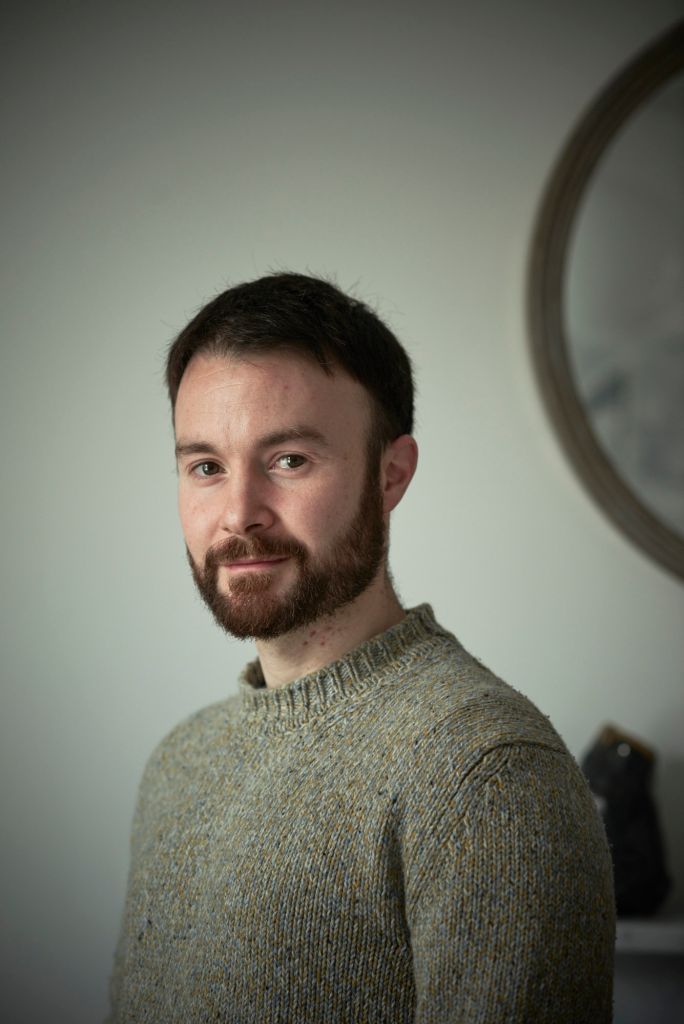
Hassan Damluji

Hassan Damluji is founding director of Global Nation, a think-do tank that aims to build a more collaborative world. Their mission is to ‘strengthen cooperation to face humanity’s great challenges by reigniting global solidarity’ so each year they publish a Global Solidarity report where they ask people around the world whether they feel ‘more a citizen of the world than a citizen of my own country’. According to Anna Hope, who led data analysis, 31% agreed with that statement in 2025 compared to 34% in 2024. The UK score went down from 28% to 26%.

Damluji argues that effective international institutions require a sense of belonging at the global level: ‘What’s important is not just waving the UN flag, we have to show how international institutions can meaningfully improve people’s lives.’ 

He sees the Board of Peace’s affront to international peace and security as an opportunity because ‘crises that threaten to tear it all apart like the second World War, which destroyed the League of Nations, produce the United Nations as institutions and produced support for a global government.’ 

UNA-UK want the UK to abide by and stand up for international law. Kinninmont said: ‘Sometimes actions are more important than words. Right now, European countries are tying themselves in knots about whether they should say things about Donald Trump’s America because they are worried about him retaliating.’ 

However, strength in numbers can help the UK resist US pressure. She continued: ‘Instead of being bullied into refusing to stand up for your beliefs you come together. If people are too afraid to stand up for it (international law) now, then they’ll see it eroding further and they’ll miss it when it’s gone.’ 

It is important for the UK and the UN that it is proactive because ‘when countries start to think that big powers aren’t abiding by it the whole system is at risk of falling apart.’ There is strong interest in forming a ‘coalition of the responsible’ because in a world ‘where you are seeing larger powers throw their weight around and resort to force more middle powers have a greater need to unite and come together.’

While the UK is struggling with its place in the world it has a very ‘well-respected tradition of the rule of law at home and a big contribution to international law historically.’ Most countries won’t want a unilateral US, only a few countries will benefit from a world where ‘might is right’ so ‘it’s important for the UK to be reaching out beyond its immediate European neighbourhood and making more global alliances.’
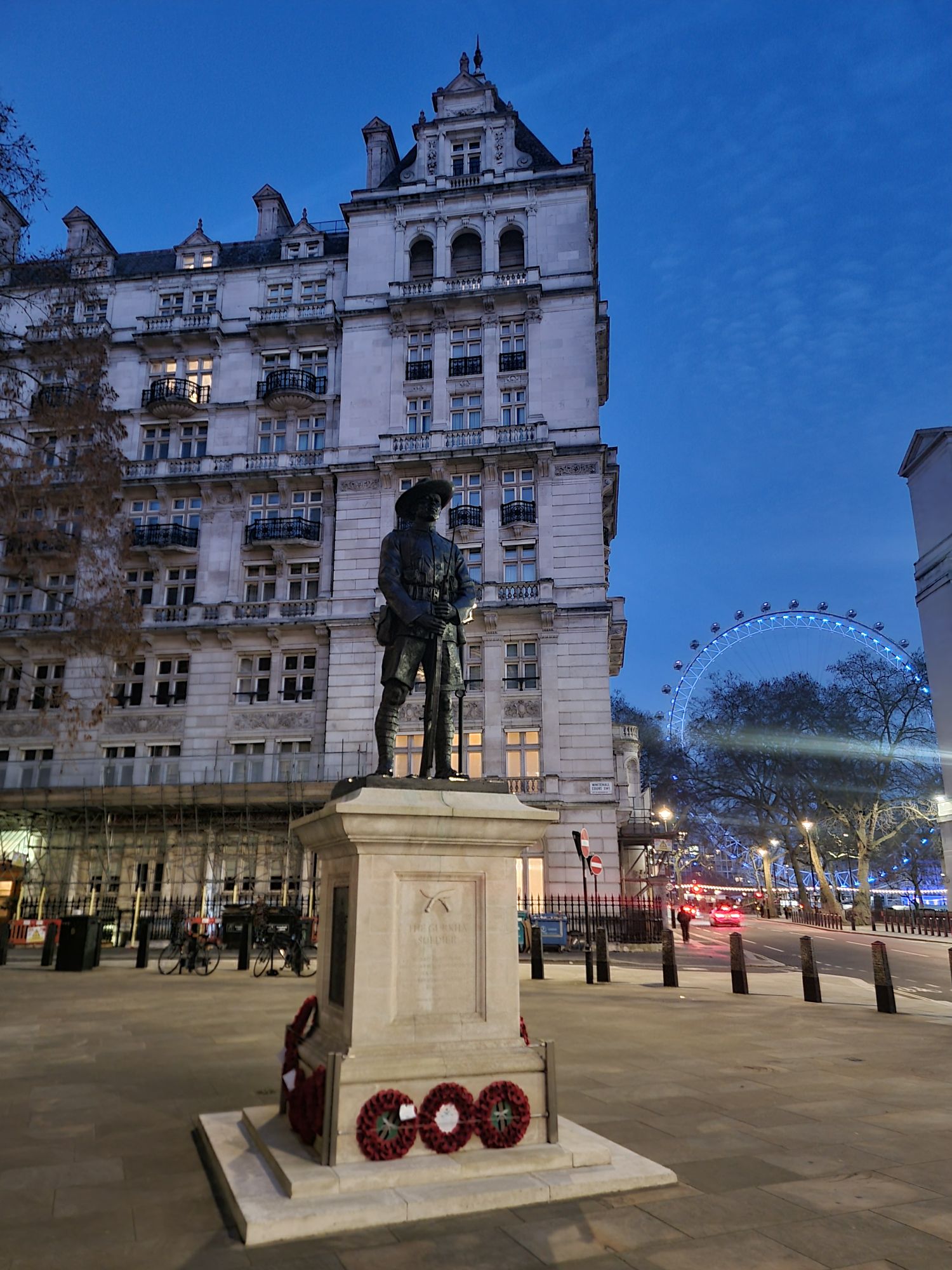
Gurkha Soldier outside the UNA-UK headquarters after sunset. Is it the end of the day for the UN?

The UNA-UK’s headquarters were once home to H.G. Wells who argued for the idea of a ‘League of Nations’ after World War 1. This was considered utopian before the war but afterward people began to see the necessity of a world government that could deal with international disputes before they spiralled out of control. Inaugurated the year after the war in 1920 the League of Nations could not prevent World War 2 and a year later the United Nations took its place in 1946. With the number of weapons of mass destruction, it may not be possible for humanity to be third time lucky, it might be three strikes before we’re out.

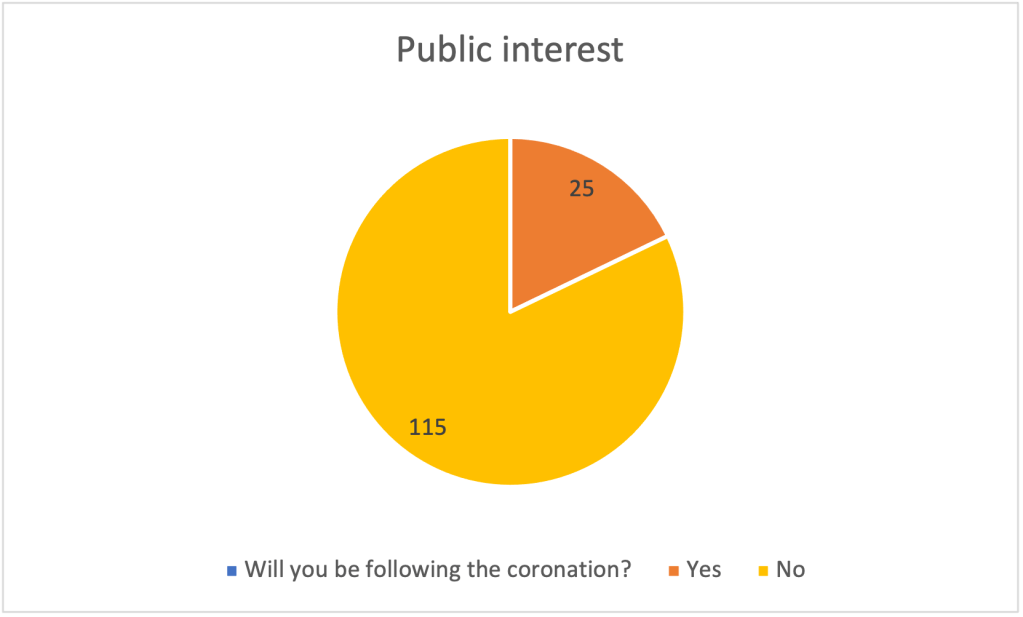
Majority of young people were uninterested in the king’s coronation and more prefer republic to monarchy

Divided opinion (Credit: PA Media)

A king cannot represent his people if he is out of touch with their lived experience. Charles III wore a 6kg golden robe in not one but two carriages, the diamond jubilee coach on the way to the ceremony at Westminster Abbey in which he was crowned monarch and the gold state coach, which has been used in every coronation since 1831, on the way back to Buckingham Palace.

These cultural relics cannot help to reconcile the differences between the royal aristocracy and their suffering subjects, as the vast expense lavished on the king’s event was branded a ‘slap in the face‘ to ordinary people struggling through the cost-of-living crisis. Young people are especially indifferent to royal affairs.

Young people tended to care less about the coronation (Source: Vox Pops International)

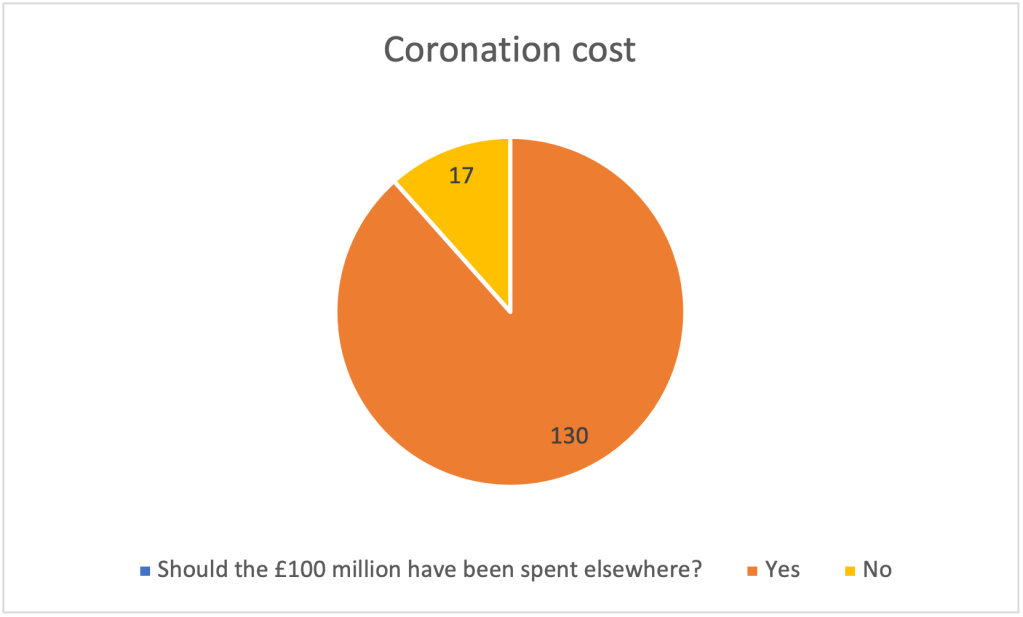
An online poll I carried out showed that most young people aged between 18-24 were uninterested in following the coronation as 82% did not see themselves tuning into the crowning ceremony. 88% thought that the £100 million earmarked for the coronation should have been spent elsewhere.

It is possible that there would have been a greater majority insofar as £100 million was a conservative estimate for the cost of the coronation with the real figure potentially as high as £250 million due to a massive security bill.

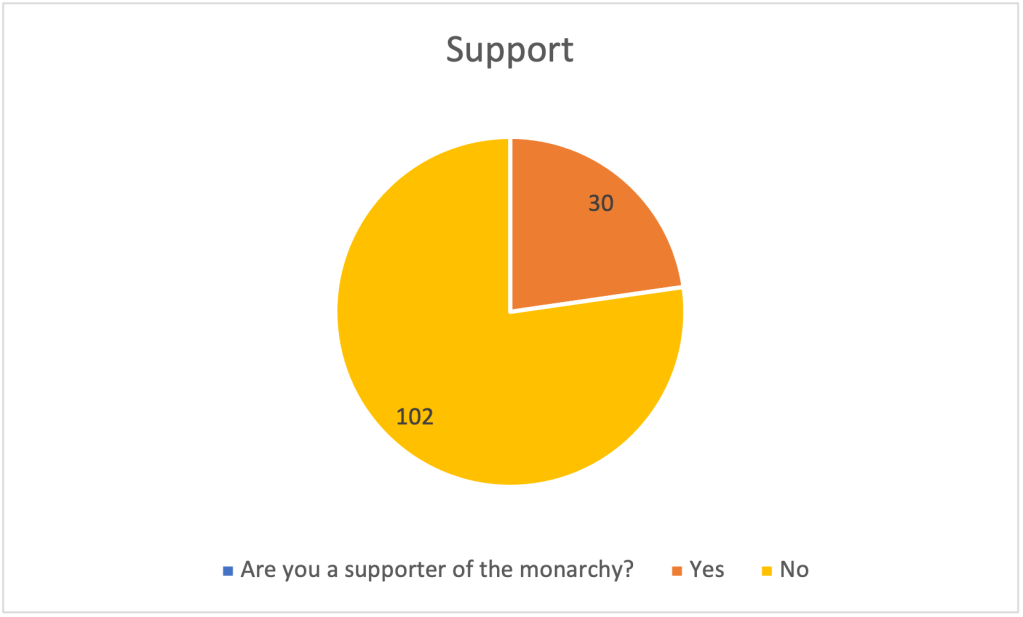
However, 23% said they were supporters of the monarchy, suggesting that even those who did support them felt the spending on the coronation was unwarranted. This seems to be borne out by the fact that 31% thought that the royal family serve an important function in our society.  

More young people thought that the monarchy served an important function than supported it, suggesting that it was unclear to them that what they do merits support even if they believe they play a meaningful role.                                                                        

While some young people felt that the royal family play a valuable role, fewer supported the monarchy as a political institution and barely any felt the outlay for the king’s coronation was justified under the circumstances, as many households are in dire straits and struggling to make ends meet.

A vast majority of over 90% believed that the pomp was inappropriate during the cost-of-living crisis. Perhaps because it showed in striking terms how wide the gap between the average family and one of the richest really is.

Young people may identify less with the royal family because they feel even more out of touch with them than they have in the past. At a time when most people are straining to earn enough to pay their rent, cover their bills and buy their food, an amount of money that could change many of their lives was spent on a pompous celebration. 

Alex Thorpe, a 24 year old poller I followed up, said: “I don’t see why people are interested in the monarchy in general or what qualities you’re supposed to admire about them.”

Of the purported £100 million spent on the ceremony he added that “People who weren’t born into state wealth and power because of their bloodline have actual problems that could be addressed with that same government money.” As a result, he believes that the institution is outdated from a practical standpoint.                                                      

Bad timing

To many young people the coronation was not as worthy of public spending as assisting those whose basic financial needs are not being met during the present crisis. Many believed that the pageantry is inappropriate given what people are going through in these trying times.

Some who like the monarchy tempered their support when thinking on the seeming injustice of spending so much when people have so little. The large sum used to put on a show for the crowning of one man when millions of people are struggling seemed excessive even to those who are sympathetic to the monarchy. 

Between the age groups there was a majority who thought that the massive amount spent on the coronation should not have been funded by the government. This is after all a king with a private estate of around £1.8 billion, but taxpayers footed the bill for his crowning ceremony.

Most people thought the government should not cover the cost of the coronation

The viewing figures for the king’s coronation, while still high at 20 million, were much lower than the 29 million that watched the queen’s funeral last September. The fall of 9 million is staggering because it suggests that the generational divide is slightly overstated as older generations are losing interest too.

Growing indifference

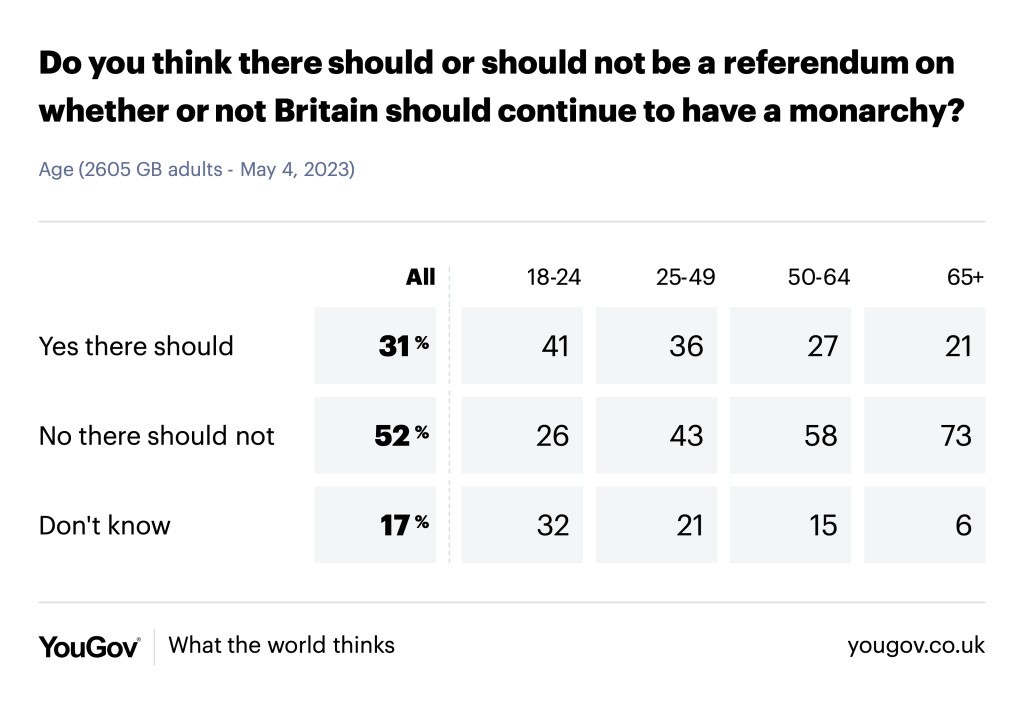
Public support for the monarchy is now at its record lowest. 18-24 year olds seem to be the main drivers of the shift in opinion as 40% would prefer an elected head of state and only 36% want to keep the monarchy. This is half as many as in 2013, only a decade ago, when 72% supported the institution.

Britain is changing and people, particularly the young, are questioning whether the monarchy is an outdated institution. Republicanism, the belief that the monarchy should be abolished and replaced with an elected head of state, has never been more popular.

Young republicans outnumber young monarchists

Nevertheless, while young people are turning the tide the old guard is holding firm and radical reform to the constitution remains a pipe dream for republicans. Another YouGov poll carried out in April 2023 showed that 62% supported the monarchy while 25% wanted a republic.

Change to the constitution is a long way off because the majority of Britain prefer the monarchy, but that perspective will become less common if 18-24 year olds continue to hold their views as they age and this trend carries over into the older age groups.

If this happens it is not inconceivable that support for a republic will grow considerably within a few decades. Eventually, with fewer supporters than detractors, the monarchy’s role in the constitution will have to be looked at more closely and put to a democratic vote.

That is what Republic, an anti-monarchy organisation, is hoping for. In an interview with Time magazine their CEO, Graham Smith, said: “It’s really people over the age of 65 who keep the overall poll above 50%, and I think that’s going to change over the next 10 years … If the support does go under 50% then the monarchy loses any last claim to legitimacy, and then there has to be a serious debate about getting rid of it.”

Less support for the monarchy and more clamouring for a republic in which there are no ‘rulers’ and ‘subjects’ would make a referendum more likely. In the 21st century, republicans argue that could not come sooner and while monarchists remain staunch opponents, there has been a seismic shift in opinions over the last decade.

If the monarchy’s decline in popularity continues then the republican movement, reinforced by young people, will be increasingly hard to ignore. If they get their way King Charles III could be the last British monarch.

Palestine

We know too well that our freedom is incomplete without the freedom of the Palestinians

Nelson Mandela
The Fight for Freedom

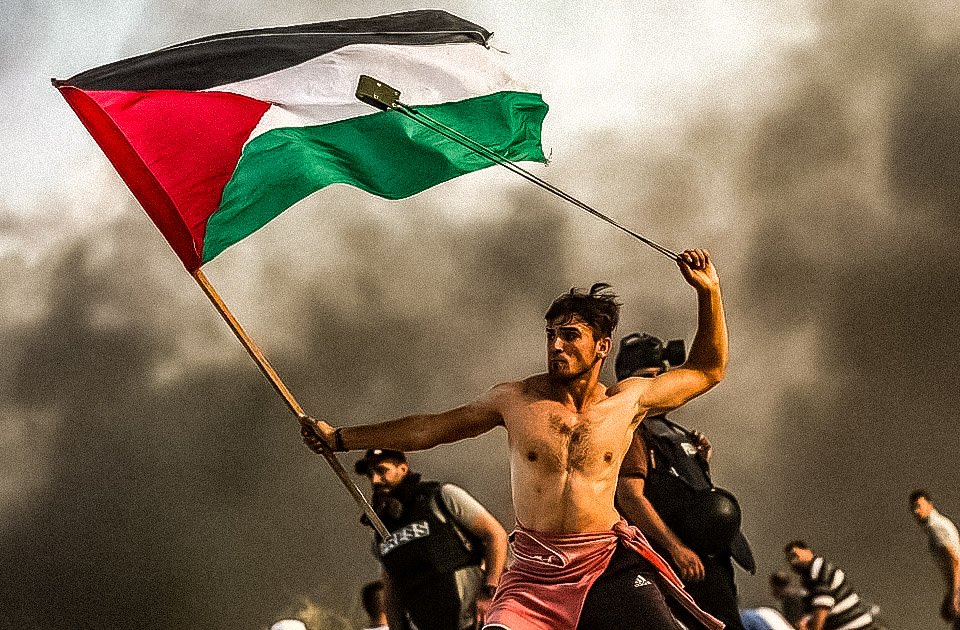
Imagine someone came into your home, assaulted you and forcefully dragged you out so they could live there, and all that was left to you was to throw a stone at the closing door in desperation. Palestine has no army, no way of protecting themselves and keeping their homes. They are up against a powerful military which has killed civilians and committed war crimes for decades, creating nothing less than an apartheid state, and are powerless to resist.

They can’t even retaliate – Israel has the most advanced missile defence system in the world, with a success rate higher than 90%. The stone may get through the gap but it is unlikely to hit anything. Rockets alone have killed over 4000 Palestinians and 32 Israelis since 2000.  From 2008 to 2020, 5590 Palestinians and 251 Israelis were killed (United Nations) and these figures don’t even include the deaths from this year, the most violent in a decade. Who are the real terrorists?

Israel, who have been making further inroads into Palestine since 1947, long before Hamas were founded in 1987, then claim they are bombing apartment buildings housing Palestinian families in ‘self-defence’. All they are defending is their ‘right’ to ethnically cleanse Palestinians, which Zionism, the belief that ‘Israel’ is God-given, encourages. They call Hamas ‘terrorists’ in order to justify levelling the buildings and taking the land for themselves, forcefully removing the Palestinians because the story of reaching the ‘promised land’ can only be coherent if they encounter no resistance.

The world is finally beginning to see through this lie and in response, yesterday they went a step further and destroyed a building accommodating media and news agencies, in order to stop their coverage of what is happening on the ground and escalate their offensive. They did this on the pretext that Hamas were operating there, but have given no evidence to prove this and never will, because there is none. Across the world they are being shown as the oppressors now and their narrative is no longer theirs to shape. What better sign of guilt than the need to silence the truth?

Fragmentation of humanity


We divide ourselves race by race, nation by nation, religion by religion, sect by sect, through even further derivatives until the fact of our shared humanity becomes irrelevant. It becomes ‘us’ vs ‘them’, as if we were somehow constituted a different way. We fail to see that our belonging to a particular group is superfical in a way that our being human is not. Yet we identify with these groups, feeling affinity with those we share them with, and so long as this continues there will be no unity. Until we can see all of humanity as our group, as like us, there will be no peace because we ruled out that possibility the moment we began to see in colour, nationality and religion, to justify our difference and raise a mental barrier between us and the rest of the world.

The fragmentation of humanity arises because of the difference between the ideas each group holds and the extent of this chasm even leads to war when it is pronounced enough. For peace to be possible we have to give up the ideas we divide ourselves by and come to regard other people as equal to us by virtue of being human. If something so simple and in line with reason seems beyond us, it will be the world itself that we burn down in flames.

A Conservationist Philosophy

Blue Marble

So long as we feel the world belongs to us there will be little hope for our survival here. Believing that it is our birthright to rule the earth we neglect its care and take from it unsustainably. We set ourselves up as the sovereign power and seek to secure our position by whipping nature into submission. Failing this, we do not fall back to earth but reach out to the stars for absolution. Though we belong to the world we do not feel our destiny is to remain here. This is clear, as climate change takes hold of the world, we plan out our route to another potentially hospitable planet. We divorce ourselves from our home, leaving it to its fate and damning ourselves along with it. Until we realise that this world is our home, that we came from it, were born of it, we will fail to save it.