Most of us struggle to be productive or feel like we could be doing more with our time. Getting things done is at the forefront of our minds and yet keeping busy all day still leaves us feeling we could use our time better. However, this is a flawed way of thinking about productivity. Time management and productivity are conflated. It’s not about managing time. Yet many fall into the time management trap, where the more focused you are on managing time the harder it is to control. Managing time is impossible so escaping the trap requires that we look for alternative ways of managing our productivity. Our focus shouldn’t be on time but on managing the things that are within our control. To improve productivity you don’t need time management. You need to manage your choices, attention, energy, attitude, habits, knowledge, emotions and yourself. Managing the first five is necessary but not sufficient for productivity. That is, it is possible to be productive without struggling against yourself, but often you will have to overcome your desires (to procrastinate or be lazy) to move toward achieving your goals.
How to Increase Productivity 8 things that need to be managed: 1) Choice management – making the right choices given our goals and self-knowledge 2) Attention management – directing your attention toward your chosen activity 3) Energy management – managing energy levels so you can undertake your activity efficiently 4) Attitude management – holding the right attitude toward carrying out your task 5) Habit management – developing the habits that will keep you consistent in the long run 6) Knowledge management – keep all of your knowledge organised and ready to hand so you can leverage what you know to achieve your goals 7) Emotion management – keeping control of your emotions is essential to getting things done (anxiety can prevent us starting) 8) Self-management – applying enough self-control to actually do what you need to do when wanting to do it isn’t enough (when perfectionism/procrastination get in the way)
Our time is not something that it is possible to manage if by that we mean that we should be in charge of it. We all have the same number of hours in a day and, given our commitments, our time is not always completely in our control. The only thing we can do is manage how we work within the time we have left over. That is, when we talk of ‘managing’ time we mean using it sensibly, given what we want to achieve. To work effectively within the time we have and be productive when it comes to our overarching goals it is necessary for us to make the right choices, pay attention to our chosen activity, have enough energy to undertake it, show the right attitude, develop the habits that keep us consistent in moving toward our goals, organise our knowledge in such a way that we can leverage what we have learnt to achieve them, overcome emotions that prevent us from working and apply enough self-control to do what we need to do when we don’t want to. Until we manage all these things it will always seem to us that our time is running away even if we are keeping busy and working all day, because we will nevertheless fail to be productive if we don’t manage these things. It’s not that we don’t have enough time, or even that we don’t use it, it’s that we fail to use it well on account of our mistakes in these areas. We struggle to use our time for the activities we want to use it for because of a mismanagement of these other things.
Managing our choices, attention, energy, attitude, habits, knowledge, emotions and ourselves will allow us to use our time more productively than if we tried to do the same activity without having considered how well adjusted we are in each domain. For, if we don’t manage these things, our time is wasted on us because we won’t be disposed toward using it well until we get these others things in check. Managing these things is a precondition of ‘using’ our time well. To the extent that we fail to we are necessarily less productive than we could be. In their absence we can’t get anything done. It seems to me that saying that we need to ‘manage’ our time is a misnomer because time itself is beyond management. We can categorise it into minutes, hours and days but that doesn’t change its fundamental nature. We have no control over the fact of times passage so we cannot be in charge of it. However, we can reorient ourselves by focusing on using our time well by managing other things that are within our control. Comporting ourselves toward managing these will help us to do whatever it is that we want to do much more effectively. In managing all these things we make it the case that we will use our time well, assuming we are right that the goal we are pursuing is appropriate to us given our self-knowledge. ‘Time Management’ gives us the wrong idea, we have to manage other things before it becomes possible for us to ‘use’ the time we have well. Time is just the space in which all our work happens to get done so we come to see it as valuable in itself, when what matters crucially is what we do in that time, not time itself. All that counts is whether we use our abilities and capacities to achieve our goals.
If we say that we used our time well we mean that, in a certain period of time, we did something that we found meaningful. The time itself isn’t being managed, our choices are leading to actions and behaviours and consequently, results, that we deem meaningful. If we say we wasted our time by relaxing all we mean is that our actions and behaviour in that time period were incongruous with our self-chosen goals. In both cases, our choice management is relevant, we manage it well in the former case but mismanage it in the latter case. Someone else who did exactly what we did might not think they wasted their time if they chose to relax. Whether or not time is used well or wasted turns on what the person wants to use that time for, so in reality it comes down to something else like our choices. Time is ‘wasted’ if we regret our choice. To regret is to prefer to have chosen otherwise. If our choice is right for us we will not regret it and our time will have been ‘used’ well.
Comparisons are drawn between time and money and what it is spent on is only productive insofar as it is an activity that an individual values. In either case, whether we talk of money or time, what it is spent toward determines whether it has been used well. It is not money or time that has subjective value, but the things and activities we use them on. Money has objective value in a society to the extent that it is the currency needed to buy necessities. Time seemingly has objective value in that the temporal dimension is the dimension of spacetime across which we live our lives and pursue our goals. People will always have time in which to pursue their goals, you start with a lifetime and lose time as you go along, but not everyone starts with money and has some left over to waste. Hence, while not spending money is saving, not spending time is ‘wasting’ it. That is, we can possess the former physically and amass it but we cannot try to hold onto the latter without it eluding us and drifting further away. The more strongly we try to hold onto time, the less we use it and the more we ‘waste’ it because the things we spend our time doing are what ‘use’ it up. Moreover, we feel that we have ‘wasted’ time when we use it as well. The more engaged we are in something the quicker our perception of time’s passage. That is, the more focused we are on something the faster time will seem to waste away. Yet this is illusory. After all, even while we are being productive it can feel like time management is beyond us because time is not something we can grip.
Time is a concept rather than an object like money. We might set aside a certain amount of time, say an hour, to get a certain amount of work done but if we fail to complete it we feel we have ‘mismanaged’ our time when really we had failed to manage something else like our attention (by getting distracted), energy (if we are tired), attitude (if we are unmotivated) or ourselves (if we lack the self-control necessary to complete our task). Time itself cannot be wasted but our abilities and potential can be wasted if these things aren’t managed and failing to act and pursue our goals across the temporal dimension would still qualify as ‘wasting time’ because our lifetime is constituted by an indeterminate amount of time. Even though someone else may do the same thing and not feel they misused time we would feel we have wasted our lives if we did not develop our abilities and grow into our potential by choosing the activities most important to us and pursuing them across our lives. Practicing what we love will improve our work and make us more ‘talented’ at that activity, whatever it may be. The goal then is not to think about how to spend time most wisely, but simply to fill our days with productive work directed at our ultimate goals.
Time slips through our fingers
Time itself is intangible, impossible to grasp, it is not an object but a concept and in reaching for it we find that it will always elude physical reality. What is objectively real and therefore amenable to change or use/misuse, is our ability and potential, our capacity to achieve things that we choose to do. Whether or not our actions move us toward our goals does not tell us how well we are using time, it only tells us how successful our actions are in helping us to achieve them within the temporal dimension, which we cannot escape. That everything happens across time does not mean that time itself is being spent or wasted by us, we do not possess it. When we say we have time, that is as meaningful as saying we have space. Space and time do not belong to us, we just happen to exist in spacetime. All we own is ourselves and all we have control over is what we do so, given that we cannot choose how much time we have over our lifetime to do what we want to do, all that remains in our volition is the ability to choose how we behave and act in relation to our goals. Therefore, we should focus on the things in ourselves that we can and need to manage rather than time, which cannot itself be managed. The intangible is beyond management. You can’t hold onto time anymore than you can hold onto space. You can, however, manage yourself.
We know too well that our freedom is incomplete without the freedom of the Palestinians
Nelson Mandela
The Fight for Freedom
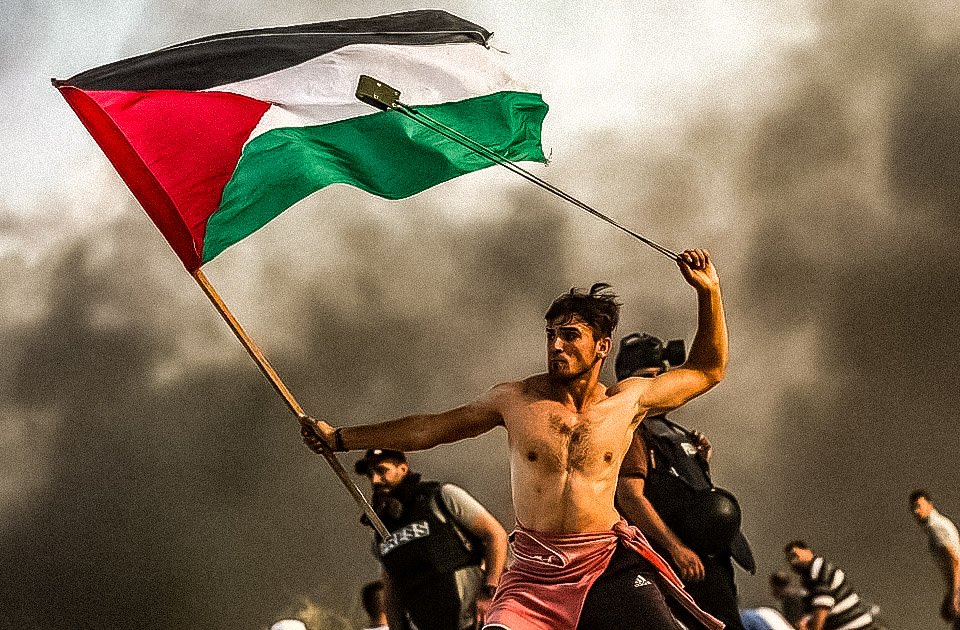
Imagine someone came into your home, assaulted you and forcefully dragged you out so they could live there, and all that was left to you was to throw a stone at the closing door in desperation. Palestine has no army, no way of protecting themselves and keeping their homes. They are up against a powerful military which has killed civilians and committed war crimes for decades, creating nothing less than an apartheid state, and are powerless to resist.
They can’t even retaliate – Israel has the most advanced missile defence system in the world, with a success rate higher than 90%. The stone may get through the gap but it is unlikely to hit anything. Rockets alone have killed over 4000 Palestinians and 32 Israelis since 2000. From 2008 to 2020, 5590 Palestinians and 251 Israelis were killed (United Nations) and these figures don’t even include the deaths from this year, the most violent in a decade. Who are the real terrorists?
Israel, who have been making further inroads into Palestine since 1947, long before Hamas were founded in 1987, then claim they are bombing apartment buildings housing Palestinian families in ‘self-defence’. All they are defending is their ‘right’ to ethnically cleanse Palestinians, which Zionism, the belief that ‘Israel’ is God-given, encourages. They call Hamas ‘terrorists’ in order to justify levelling the buildings and taking the land for themselves, forcefully removing the Palestinians because the story of reaching the ‘promised land’ can only be coherent if they encounter no resistance.
The world is finally beginning to see through this lie and in response, yesterday they went a step further and destroyed a building accommodating media and news agencies, in order to stop their coverage of what is happening on the ground and escalate their offensive. They did this on the pretext that Hamas were operating there, but have given no evidence to prove this and never will, because there is none. Across the world they are being shown as the oppressors now and their narrative is no longer theirs to shape. What better sign of guilt than the need to silence the truth?
Nietzsche posited the eternal recurrence, the idea that our life will come back to us exactly as it was for eternity, as a kind of thought experiment:
“The greatest weight.– What, if some day or night a demon were to steal after you into your loneliest loneliness and say to you: “This life as you now live it and have lived it, you will have to live once more and innumerable times more; and there will be nothing new in it, but every pain and every joy and every thought and sigh and everything unutterably small or great in your life will have to return to you, all in the same succession and sequence – even this spider and this moonlight between the trees, and even this moment and I myself. The eternal hourglass of existence is turned upside down again and again, and you with it, speck of dust!” Would you not throw yourself down and gnash your teeth and curse the demon who spoke thus?… Or how well disposed would you have to become to yourself and to life to crave nothing more fervently than this ultimate eternal confirmation and seal?”
The demon comes to us in our ‘loneliest loneliness’, at a time when we are defenceless against being overpowered by the thought. The answers we give to its questions, if we reply honestly, reveal our attitude toward the lives that we lead. If thinking about our lives as our eternity makes us afraid then we are wasting them. Of course, each of us has regrets, has made mistakes that we would undo if given the chance. Yet, if our life as a whole seems empty then it falls on us to make the decisions that would correct this, in order to be able to affirm it if it came back to us exactly as it was down to the smallest detail. The challenge then is to live in such a way that you could smile at this prospect.
By severing our ties to a life other than this one across eternity Nietzsche asks us to think hard on the choices we make in our personal infinity. If there is no afterlife and the heaven and hell of the idealist pale in comparison to this life, the only reality, then all that is left to us is to focus our attention on it and live it as well as possible in view of the fact that it is all there ever will be. Thinking of the eternal recurrence prevents us from imagining that we can be saved from this life to find redemption in the next.
Considering the thought encourages us to take decisions and act in such a way that we could desire the eternal return of what we are about to do. The greatest weight is placed on our actions because whatever choice we elect to take forms part of our personal infinity. The aim of the thought experiment is then to overcome the life-denying attitude of the idealist to encourage us to affirm this life. If it is all there is then there can be no excuses for failing to live it fully, one stands to lose everything if they look beyond it.
To avoid being crushed by the thought we must change so we can bear our fate, by becoming so well disposed to ourselves and our life that we want nothing other than its eternal recurrence. The ideal is to become the kind of person who would consider the demon’s message divine. This means resting the weight of eternity on each of our actions in order to make certain that what we are about to do can be affirmed eternally. The effect of the thought of eternal recurrence depends on it overpowering us and exercising mastery over our lives. If it takes root and has personal significance it holds the transformational power to make a life-changing impact insofar as it challenges us to create a life that we wish to repeat eternally.
It is not the man who has too little, but the man who craves more, that is poor
Seneca
The Consumer
Many of us buy into the idea that the richer we become and the more things we can get, the happier we will be. Yet, everytime we finally get a hold of that one thing which we were certain would change our life, once it is no longer new, it falls down in our estimation to become just like all our other possessions. What seemed so enticing to us, what we were certain we could not live without, loses its pull the moment it comes into our hands. For a while we may cherish it but there will inevitably come a time when it no longer attracts us, and another thing we don’t have will catch our eye. This cycle repeats incessantly so that each time we gratify our desire, soon another will take its place. Until we can escape the need for more we will never be satisfied, because what we own will never be enough.
In the west, in our consumerist culture, this chronic dissatisfaction usually lasts a lifetime. Few even recognise the trick they play on themselves, and those that do rarely overcome their own addiction to buying what they have no need of. The fact is that it feels good when they get themselves what they covet, it is only much later that what they had their eye on becomes just another thing they possess, at which point they will seek yet another object to lust after. In this way, most of us continue to purchase the things we assume will make us happy, and never learn to be satisfied with what is ours now. In our society it seems that being grateful is a sin, for each day we are reminded by the media that the thing we don’t have is the very thing we need. These messages convince us that our happiness is to be found in material things, especially the ones that we don’t own, so that we feel compelled to go after them in order to fill our lack.
Nevertheless, it does not matter what we get, however valuable it might be. If we rely on getting more things to feel happy sustaining this feeling will mean there will always be one more thing that we need to get. As much as we try to convince ourselves that it will be the last time we spend carelessly, that it is the only thing we need, this habit of buying will continue because there will never come a point at which we will be satisfied. That was denied us the moment we failed to be satisfied with what we have now, because until we learn to be, there will always be one more thing that we ‘need’ and the project will go on to infinity.
How many times do you recall being truly satisfied with what you have, not wanting more? Until we no longer need more to feel better about ourselves and our lives, there can never be happiness without constant spending. Only by being content with our lot, whatever it may be, can we begin to be rich in possessions. Indeed, it can be argued that wealth is a relative notion, that depends on how satisfied a person is with what they own. That is, the rich man would be the one who is satisfied with his possessions, who feels he has more than enough to be happy. Having a great deal of money and assets relative to our needs would then be enough to be wealthy. The poor man would be the one who is dissatisfied with his lot, who feels he needs more to be happy. Generally, someone is poor if they do not have enough to live comfortably in society. But this depends on their own view of their situation such that even if they have little, but can live on it and remain satisfied, they are happier with their situation than some ‘rich’ people that feel they need a bigger house to find happiness. Of course, this means that to be rich is to be satisfied with what you have, while to be poor is to crave more such that whatever our physical wealth might be, until we overcome the need for more we remain beggars.
Truth is a pathless land. You have your way and I have mine – as for the correct way, it does not exist. The way of life we choose is our own affair and there is no objective duty to which it must tend. There is no fundamental meaning which we can all live by; truth is a lie, an illusion each prophet claims to possess. We look to them for answers they cannot give – the truth we affirm must be uniquely our own. Until we realise that no one is coming to save us, that this life is our own to shape, we will continue to look outside of ourselves for redemption. However, it is our responsibility to create our own meaning, to find our own truth so that this life can be experienced fully on our terms. Everything is within, there is nothing outside of us that could give us purpose. Thinking for oneself is the only way to discover our reason for living.
The narrator is much like me in that he has recourse to books whenever he has time to himself. In fact, all he seems to have done is read book after book, focusing on the life of the mind. He grows ashamed at this once it becomes clear to him that he has been avoiding life, has dealt with its shadow and not its substance. For that is all novels can impart to us, a vague recollection a writer has of his or her past which is embellished and transformed into something else entirely. In any case, all we get through reading these stories is a dull likeness of a lived experience. This intellectual becomes tired at the ideas he has been learning, at the time he is spending thinking and imagining at the expense of reality.
Enter Zorba, a greying man in his sixties, who leads a life of action. He has known many people, had many conquests and professions and has even fought in wars. He is guided by his passion to act on his first impulse, to do precisely what he would like to do at the moment it impresses itself on him. He lives according to his feeling, getting the most out of each moment. As such, he lives as if he would die at any minute. When asked what he believes in, he replies that his belief is in himself. That because he sees through his own eyes, thinks through his own mind, his experience is all that matters to him. This is because he only has power over himself and is the only person he can ever truly know.
His freedom is then tethered to himself whereas others are limited by an idea, a religion or nation which they commit to, lose themselves in. They free themselves from one only to find another nobler one to be chained by, another God to worship. Zorba does what he pleases while they are kept within the confines of their ideal. Happiness in life is to be found simply, by doing what you are passionate about. For him this was playing his santuri, dancing and going after women; living deeply.
The writer loves life but reproaches himself for having had his attention wrapped up in books as he is presently penning a manuscript on the Buddha. He realises that he needs to leave aside metaphysical cares, vain anxieties about what might happen and penetrate through to the heart of man, dealing directly with people so as to live. Zorba is the man he has been searching for, one who lives with feet firmly on the ground, while he in his philosophy has been trying to leave it. He is tied down to mother earth through his experiences and has not been to school, had his mind perverted. He has lived and his mind is open because of the adventures he has had and the primitive boldness which was never undermined. He deals with the problems of life intuitively, cutting right to their heart, while others think them complicated. His aim is steady because his whole body is firmly planted on the ground, always in contact with mother earth. He is true to his nature, while we lie to ourselves and try to soar beyond the material world.
Zorba dances, jumps into water when he feels like it, acts without stopping to think. At no point does it occur to him to doubt himself, to stop doing a thing which suggests itself to him in his moments of happiness, he simply lives. The writer, absorbed by this, feels he has wasted his life. That all he has learned up to that point has prevented him from living. He wishes to learn from Zorba, to keep his five senses trained, and his body strong so it would enjoy and understand, so that he could run and fight, so that the soul and body came together as one. In his companion he sees the right path. Someone who has opened his heart to the world and had it broken over and over, only to keep going back to it. One who must live at all costs.
The narrator was bothered by being labelled a bookworm by an old friend and endeavoured to throw down his pen and paper in order to launch himself into a life of action. Zorba shows him how colourless his life has been, how little he has seen and experienced, and that it is running away from him. A man’s happiness depends on his stature and if he is to be worthy of it this must rise.
When he looks up at the sky at night he sees an indifferent universe. We are born to say a few words, perhaps give rise to an idea, but inevitably destruction comes. Our ‘nations’ and ‘races’ have the same value in that ruin. Yet, having seen the futility of this existence, we may accept our roles in nature and play our parts on earth to the end, coherently, without being discouraged. Man has few true necessities and happiness can be found in the simplest of ways, by embracing the world around us.
Yet, on seeing a Woman he likes he says that he does not want trouble. Zorba replies that life is trouble. That only death brings no trouble, while living means undoing your belt and looking for it. The writer agrees but presently his contact with men has become a soliloquy, something he resolves to do when he is not around anyone only to give it up in their presence. He is so out of touch with life that he would prefer to read a book about love than fall in love with a woman. Zorba sees this and tells him to stop thinking, that now is the time that he is going to save or lose his soul. Paradise for men is women, regardless of what the priests say.
He was wasting his life, the woman and he were only insects that live for a second under the sun, and then die for all eternity. Zorba recounts a story in which a Muslim holy man had told him that he who can sleep with a woman but does not commits a great sin, that his soul will be destroyed and he will be cast into hell regardless of other good deeds. What else are men here for, does a desire for sex not follow from our nature? God will forgive all sins, but that sin he will not forgive.
Zorba lusts for travelling, woman and new adventures, which can be taken up once his ‘wings’ grow, that is, when money comes into his hands. He sees it as a means to the ends that will allow him to live. That, after all, is the only rightful use of money, treating it as paper that needs to be earned in order to do what you want to, to have freedom to go wherever you like, see whatever you hope to see. Though he would like to be somewhere away from the mine, he is nevertheless one with his task of scattering the earth. He leads the men and taken up by his work, completely absorbed by it, he pays no attention to what is going on around him. He is riveted to the pick and by extension the rock he is reshaping. Whatever he does fills his attention and he loses himself in it, lives the experience with his whole being.
The writer, through his manuscript on the Buddha, has come to believe in renunciation, in denying the desires of the flesh in order to further the soul’s development. Yet, he fights against his lust for the woman and finds this battle interminable, he beats his desire back only to find it return just as strong as before. He sees this temptation as inciting him to depravity, to a life of the flesh at the expense of the soul. Zorba, divining this, tells him that life passes in a flash, but that everything is simple in this world, should he not complicate things. He maintains that God would be much more pleased if he went to the woman.
The narrator tells himself that the life he is leading brings him happiness, that living far away from men, doing things in solitude, is what he wants. But he realises he is dissembling, that in his heart of hearts he is unhappy. He feels his life slipping away, another year is passing and he has nothing to show for it. He begins to think over his life, to ask himself what he has done with it. His realisation as the new year comes in is that it is a mortal sin to violate the laws of nature. It should not be rushed or slowed, instead we must obey the eternal rhythm.
He asks himself who the first person he sees in the new year might be. To his surprise it is the woman he likes, who smiles at him and leaves her gate open for him to follow. Yet he hesitates, says to himself that a man would go after her, that his father and sons would, but not him.
The moment the chance passes he feels he has committed a mortal sin. He is angry at himself and when Zorba jokingly asks him what the books tell him about woman he blasts them. Perhaps he recognises that he has avoided direct contact with woman through books, has grown to fear what he has never tried to understand in reality. That he is afraid of them and can only bring himself to deal with their likeness in stories. But he is disillusioned by this and reproaches himself for not having had the courage to take that step, to wordlessly jump into action, without weighing things up.
In Zorba he sees one with everything he needs in life, who has his fill of food, drink and woman. This man is at one with the universe, never for a moment out of touch with life. He adapts to the world around him and his soul and body form a harmonious whole, while everything blends into his flesh. Indeed, the older he grows the younger he feels and he even complains that the world has grown too small for him.
The narrator picks up a book of poetry which he enjoys, having read it many times before, but throws it down in disgust. He now finds it bloodless, tasteless, devoid of any human substance, without life. He asks himself how it could have been so interesting to him previously, this game of words without even a drop of blood. The human element is impure and sublimating it into an abstract idea, putting it into words, can only mean that it rarefies and evaporates.
Buddha is the last man who had a ‘pure’ soul, empty of illusions and fear, reduced to spirit. He preached renunciation of the body and heart, emptied himself so that within him there remained only a void. There is no blood left and no seed within him, only his spirit remains, denying the body freedom to throw itself into the world. He is conscious of a life and death struggle against this great NO that was consuming his heart, a battle upon which the salvation of his soul depended. Meanwhile he had never lived, had not loved enough. He was at the beginning and Buddha had come to him too soon. There was nothing to renounce, he had never paid his body any heed.
On the other hand, he notices that his companion sees everything as if for the first time. He is mindful of his experience and is never thinking of anything else when something attracts his attention. Everyday, he sees a new world before his eyes, an intense vision breaking upon him. He lived the earth, water and animals without the distorting intervention of reason. The writer is being consumed by the desire to touch as much of the world as possible but has not done so precisely because he is reasonable, he thinks too much while Zorba acts. He is passive when only action will mean he is alive, there is no other salvation.
While away Zorba writes a letter in which he talks about his reflections on life. He realises that he is not in this world to be like an animal that only lives to eat, so to rise above them he works day and night in order to be a man. Yet, even as a man he is uninterested by what other people hold sacred. Other people reflect hard on the vanity of things, but he does not care to reflect. The events of his time are of no consequence, news and gossip bore him, it is all the same to him what happens.
Whether the Greeks sack Constantinople or the Turks conquer Athens amount to the same thing. If he ends up in heaven or hell, whether God or the Devil take him, is a matter of indifference. It does not matter what his work is, or if he has a woman, the only thing that makes any difference is whether he is alive or dead. After all, he is going to die, become nothing, but until he does there remain opportunities for adventure.
It is for this reason that he fears old age, has dissembled in order to avoid feeling it closing on him. He would like to carry on in freedom and hates the idea that he may in the future no longer be able to do what he would like to. He would prefer a swift death at the exact time that he lost his freedom, at the moment his body began to lose its strength for good. He has a devil inside him which does not want to grow old, that never will, which he calls Zorba. The writer is like him, he says, he has his own devil but does not know his name yet.
While most people live life with brakes on Zorba has thrown his aside and careers in whichever direction it takes him. He is not afraid of a jolt, or of crashing at full speed. What does he have to lose? Nothing. Even if he takes it easy like everyone else he will end up just the same. Another lost soul that forgot to live. Onward then, come what may. Adventures are good for him, he feels younger and is revived through his exertions so that he becomes 20 again. A girl calls him ‘Grandad’ and he is bothered by it but does not let her see it. He buys her a drink and is burning up with passion but remains cold on the outside. She responds to this and he wakes up the next day with the ‘female of the species’ beside him in bed, which is for him what paradise will be like.
The writer paints a picture of the man writing the letter, who goes straight to the substance of life and is urged on irresistibly by a desire he cannot satisfy. He lives deeply because he must. Like the great philosophers he is dominated by the problems of mankind. He lives them like they were necessities and is filled with wonder at the world around him so that, like a child, he is seeing everything for the first time. It all seems miraculous to him, the sea, the earth, trees, people and animals.
Zorba is fascinated by the world around him and is devoted to it, while the writer fails to appreciate what surrounds him. Leave your books alone, he says, man is a wild beast and wild beasts don’t read books. Aren’t you ashamed? In his turn the writer sees in Zorba the embodiment of the abstract ideas that have been impinging on his consciousness, which incite him to live. In this man, this warm body teeming with life, is the answer to his call for an understanding of a life of action. A life lived.
The narrator’s exorcism of Buddha grows calmer and he becomes sure of deliverance. All the same, he feels that he is not warmly involved in human interaction. Others feel their neighbours happiness and suffering deeply while he alone is impotent and rational, does not love or hate with passion. He feels apart from them because his blood does not boil, so far he has pathetically left things to fate, has reasoned while others have allowed themselves to feel what they will and express it. He admires their passion, the rage they have when something bad happens, the sorrow they drown out, the sadness expressed silently. Life is hard. Even the luckiest life is hard. But troubles are made for young men.
The eternal vain, stupid questions; Why? What for? come to poison your heart. To pay them attention at the cost of acting will fill you with bitterness. The terrible warning that there is only one life for all men, that there is no other, that all that can be enjoyed must be enjoyed here, sounds within him. In eternity no other chance will be given to us. A mind hearing this pitiless warning would decide to conquer its weaknesses, its laziness and cling with all its power to every second that flies away for ever. Great examples come to mind and you see clearly that you are a lost soul, that your life is being frittered away on petty pleasures and pain, on trifling talk.
Religion fills him with aesthetic pleasure rather than mystic fervour, it has become art for him. In his youth he had rebelled against the child in him that seeked the mysterious, the divine. Once he had been told a story about a child that had fallen into a well and had seen a marvellous city, filled with all the riches that could be desired, the result of magic. He went home to look into his own well and imagined that he could see it there too. With his feet off the ground he readied himself to jump into the water only to be saved by his mother at the last minute.
As a child he almost fell into a well. When grown up, he nearly falls into the word ‘eternity’. He had thought about it with closed eyes and arms apart, wanting to throw himself into it. Now he realises that, far from a mystery, eternity is each minute that passes. He had conquered many words, ‘God’, ‘Country’, ‘Love’ and ‘Hope’ and each time he felt he had escaped danger and made some progress. But he was only changing words and calling it deliverance. For the last two years he had been hanging over the edge of the word ‘Buddha’. Yet he is sure that this will be the last well of all, the last word-precipice, after which he will be delivered for ever, Zorba be praised. All that life offers him is met with passion and eternity is confined to its limits.
Zorba returns and the narrator hides his excitement at the reunion marked by the playing of his santuri and a song that had changed his life, or showed he was right. ‘Once you’ve made up your mind, no use lagging behind, go ahead and no relenting. Let your youth have free rein, it won’t come again, so be bold and no repenting. Courage! In God’s name! Venture, Come what may! If you don’t lose you’re bound to win the day!’. Their cares were scattered, petty troubles vanished, big and small worries faded into the air. The workers hear the song and dance around the fire into the night.
The narrator reads about a great ascetic who trains his students in his way of life by teaching them to forego attachment to the body. They submerge themselves in cold water seven times in succession. Following this, they climb a mountain peak in the cold, naked to their waist. The master tells them that their happiness should be found in themselves, that they should have no interest in pleasing others, that this life and the next are but one. Woe to all those who think otherwise. He thinks he must free himself of all these phantoms, Buddhas, Gods, Motherlands, Ideas. Woe to he who cannot.
Having once imagined an intellectual community where talented artists, poets, writers and musicians all came together to exchange ideas and bring forward progress, he now feels the naivety of the desire of his youth, for they would all be buried there, passing the time writing away day and night, neglecting the world. In Zorba’s words, he would be frittering away his life with a whole lot of nonsense. Life is about enjoying yourself and it must be lived to the fullest.
They travel to a monastery in order to have papers signed for the work they are doing in the mine. The monks there ask for news of the world they have never returned to, some are interested in king and country, others in women. Zorba dislikes them, if they wanted to know about what was happening they should go back. If they wanted something they had to go after it, not deny that to themselves. That is how men free themselves, by stuffing themselves till they burst and no longer want it, not by turning ascetic. To get the better of a devil we have to turn into a devil and a half. To overcome our desire for something we have to consume it till we no longer want it.
The bishop offers a theory about eternity in which it is possible to experience it in our ephemeral lives. However, our worries lead us astray. A select few, the flower of humanity, find eternity in their transitory lives. Those who do not are saved by God through religion. His mercy gave the crowd a chance to find eternity in the next life. Zorba finds the monks insufferable, seeing in them an empty resignation which they regret. They all want something but do not come down into the world to purge themselves.
Zorba cares deeply for the female of the species, a tear from a woman could drown him. His experiences with them have taught him much and he wishes to help them to be happy, or to console those who cannot be. He has reverence for the rascally God whose conquests were far and wide because he appeared to women in whichever guise they wanted and made love to them for their own sake. Zeus is for him a great martyr who was sorry for them, who sacrificed himself for women because he understood them. Meanwhile, the narrator swallowed everything he read in books without thinking about the people writing them. What do they know about women? Not the first thing. What could they possibly know about life? All those who actually live the mysteries of life have no time to write and all those who have the time don’t live them.
He had fought in wars for his country, plundered the Turks and killed the Bulgars. He bears cuts and bullet wounds all over the front of his body while his back remains unmarked, he had always faced danger head on. Presently, he is ashamed of having cared for nations, and sees no difference between Greeks and the rest of the world. Now he asks whether they are good and bad but no, this is inconsequential too, he has pity for both. Each man has his own devil and God, and will end up worm food just the same as everyone else. We’re all brothers. Poor devils destined to lie six foot deep. So long as there are countries, races and religions, man will stay like a ferocious animal.
At the sight of spring he rises up half-naked and runs out onto the beach to look for the signs that betray the season. He dances and rolls around in the grass as if he is seeing it all for the first time. That miracle, that moving blue, what do they call it? That green apron enveloping the land, what is its name? Who is the artist that did it? ‘There’s magic behind all that, boss.’ Basking in the sun’s warmth and the calm of nature, they feel that the body and soul are kneaded from the same material. The need to live life to the fullest is again expressed, doing things by halves is the reason the world is in the mess it is in today. God hates a half-devil ten times more than he hates an arch-devil. Zorba throws himself into life and is completely absorbed by his work, by whatever it is he resolves to do. He is happy because his life is full.
The narrator is impressed by the power of nature and notices how carefree animals and humans like Zorba, who simply live by its dictates, doing what it compels them to do, are. That’s the road to take, find the eternal rhythm and follow it with absolute trust. The resurrection of Christ means little to Zorba. Nevertheless, he sees food as being resurrected as Zorba and channelled into dancing, sex or work. If he eats an animal he feels sorry for it, that he must do something to account for its sacrifice so that, through him, it becomes energy and is not wasted so that it fizzles into nothing. The food becomes Zorba so he cannot sit around or sleep, because it would then be lost on him and he would show himself to be ungrateful. Therefore, he goes out after the sound of music and dancing and tries to persuade the narrator to join him. If he were young he would throw himself headlong into everything, work, love, and he would fear neither God nor Devil. That is what youth is for.
He then goes off into the village. The narrator watches him go and his own body persuades him to go somewhere himself, without his mind coming to a decision. He finds himself at the woman’s house and repeats his companions words to gain courage and stays with her for the night. The next day his body is relaxed and his mind is at ease, as if he has solved the problems it has posed. He felt like an animal after the hunt that had caught and eaten its prey and now licked its lips with satisfaction. He became sure that the soul was the body and vice versa, that caring for the one nourishes the other. He does not allow his mind to take control of this carnal joy, to make thoughts of it, but lets his body rejoice like an animal. He gazes around and within himself at the miracle of life, at the way our bodies perfectly fit within nature.
He then finishes his manuscript so he can be rid of the Buddha within him, so that the exorcising power of words overcome his torment and free him from his service to the life of the mind and the ideas that prevent him living. Nevertheless, he still has a long way to go. A tragedy befalls the woman and the narrator inhumanly transposes reality, removing the blood, flesh and bones to reduce it to the abstract. He cannot allow himself to feel it deeply so anything about what happened that enters his mind is met with philosophy, surrounded with artifices that make it harmless. He is coldly rational because he is out of touch with life, beyond feeling and afraid of emotion, because the suffering would prove too much for him, so he dissembles and resigns himself to fate because he has no passion with which to oppose it. Zorba curses luck and rages against God for allowing the young to die and the old to live on. In his pain, he says that he will never forgive God. That he would be ashamed to stand before him if he was a true God because everything that happens in the world is unjust.
Zorba’s sorrow makes him ashamed. That is what a real man is like. One with warm blood who lets real tears stream down his cheeks when he is suffering, who when happy does not ruin his joy with metaphysics. He allows himself to feel whatever it is deeply, with passion that cannot be extinguished until it expresses itself fully. He is a real human being with a heart who will fight for those he cares for and suffer with them out of love. His happiness and his suffering are experienced passionately with his whole being. He cannot help but feel everything deeply because he opens himself to life, allows it in without resistance, so that whatever happens affects him greatly. Life then reaches its fullest expression in him, it flows into him effortlessly and he responds to it passionately.
After his own mistress dies Zorba is grief stricken and asks the narrator why people die, but he replies that he does not know. This exasperates him, ‘what’s the point of all those books you read, if they don’t tell you that what do they tell you.’ The perplexity of mankind? ‘Damn their perplexity. I want you to tell me where we came from, where we’re going. You must have read 50 tons of paper over the years, what did you get out of them?’ He cannot answer him.
All he can proffer him is a new thought occasioned by the sombre presence of death. Humans feel sacred awe at our place in the universe, the earth is a small leaf on a tremendous tree whose other leaves are the stars. Some men reach the edge of the leaf and look out over its precipice, gazing into chaos. We imagine the frightening abyss before us and tremble. The great danger comes after this realisation that we are insignificant, some grow dizzy, others grow afraid and try to find an answer to strengthen their hearts, and they say ‘God’. Others look at the void calmly and welcome it, resigning themselves to necessity. Zorba cannot agree to this, he is unafraid of death but does not welcome it, will never offer his neck to Charon like a sheep ready for slaughter.
Silence reigns between them because of their grief and the eternal, vain questions force themselves on the narrator again. What is this world, what is it aiming at? The aim of man and matter is to create joy according to Zorba. But with what? Is there a soul that remains after the body, or is this desire for immortality born not from the fact that we are immortal but that during the short span of our lives we are in the service of something immortal, subject to nature itself.
Zorba finally breaks the silence, saying that every time he suffers it cracks his heart in two, that it is all scarred and riddled with wounds already, but sticks togetherso they can’t be seen. He can stand so much only because he is covered in healed wounds. Now, he has stopped thinking all the time about what happened yesterday and no longer asks himself what is going to happen tomorrow. What’s happening today, this minute, is all he cares about. What is he doing at the moment? If he’s sleeping, he should sleep well. If working, he works well. If kissing a woman, he kisses her well. He forgets everything while he is doing it, the rest of the world falls away and nothing else matters, it is only him and her. So he gets on with it.
Without the devil in us we would be empty so Zorba lets his demons do whatever they like such that some call him honest and others dishonest, some think him wise while others are convinced he’s crazy. Yet he’s all those things and more because he listens to his desires and follows them with passion, because living is for him an impulse. The narrator thinks about Zorba’s words which are rich in meaning and had a warm earthy smell. They came from the depths of his being and had a human warmth. Meanwhile, his words were made of paper. They came down from his head and were scarcely splashed with a spot of blood. If they had any value at all it was to that mere spot of blood that they owed it.
Luck is blind, it can’t see where it’s going and runs into the people who we call lucky. Zorba doesn’t want it if it’s like that. He’ll take his own chances. This is his response to the pulley from the mine failing catastrophically. The narrator ends up losing everything, his money, his workers, but he still has what he sees as an unjustifiable happiness. In the labyrinth of necessity he had found liberty playing in the corner, and had played with her. When everything goes wrong, it can be a joy to test your soul to see if it has courage. An invisible enemy which some call the Devil, others God seems to rush upon us to destroy us, but we are not destroyed. Each time that we master ourselves though we remain externally defeated, we feel outward calamity turn into an unshakeable felicity. Men should behave toward blind but powerful necessity with boldness, addressing it with defiance ‘You won’t put my fire out, you won’t tip me over!’. After all, we should not wish for an easy life but the courage to endure a hard one.
Whatever the circumstances, however dire they may be, happiness is doing your duty and the harder the duty the greater the happiness. That duty is to live. Indeed, the soul of the first men on earth, before it became detached from the universe, felt the truth directly, without the distorting influence of reason. That is, our instincts have been finely tuned to respond appropriately to certain experiences, to understand signs around us and react to them in ways that will benefit us. Consequently, what we immediately feel inclined to do, our first impulse, is usually the right course. If we see a girl and would like to talk to her it is our nature that is telling us to, for we are social animals wired for human interaction. Reason comes in the way of this truth.
With reason we think we are fortifying ourselves against the unknown, erecting an impassable barrier around our existence. We imagine we can give security and order to our lives. This second line of defence holds in check the great certainty of our deaths which now and then penetrates the outer walls of our soul. Yet calming ourselves in this way means that our petty certainties go unchallenged. That we go from day to day as normal, doing the same things again and again, following a routine so that we become comfortable with everyday reality. But only by confronting the great certainty without the help of reason, feeling it coming toward us every moment, can we be struck by how our life is running away from us every second, never to return. Only then will we take it seriously and throw ourselves into living life to the fullest. Only when we feel deeply that death is coming for us all will we be convinced of the necessity to do everything we want to do before it finds us.
The narrator claims he is free and Zorba tells him he is not, that he is tied to a string that he must cut in two first. His string is perhaps longer than others and he can come and go but until he severs it he will never be free. To cut it means risking everything but because he has such a strong mind this is difficult for him. It always keeps account, never risks it all, but keeps something in reserve. It hangs on tight to the string, if it lets go, the head is finished. But if a man fails to break the string, there is no flavour in life. Any potential action is pre-empted by the mind, barred for fear of risking anything at all so that nothing is allowed to happen.
Reason will never break the string. A man can lack nothing but he needs folly to cut the string, to free himself. Otherwise, being reasonable, he sets limits on his impulses and desires, grows calmer, loses his passion for fear of opening himself up to the world. He cannot obey the savage clamour within him, does no insensate, noble act in keeping with his nature, if he listens to the moderating voice of logic.
Zorba, in his own words, has done heaps and heaps of things in his life, but still did not do enough. Men like him ought to live a thousand years. One cannot help but agree. His mindfulness of life is never affected by the restrictive powers of reason because it goes beyond him into the world. He focuses all his attention on what surrounds him and consequently has no time to stop and think. He devours life like it is a feast, never putting off until tomorrow what he could do today. Rather, he is filled with a zest for life that compels him to act without delay, to passionately go on living so that he can experience as much as is humanly possible before the great certainty.
We divide ourselves race by race, nation by nation, religion by religion, sect by sect, through even further derivatives until the fact of our shared humanity becomes irrelevant. It becomes ‘us’ vs ‘them’, as if we were somehow constituted a different way. We fail to see that our belonging to a particular group is superfical in a way that our being human is not. Yet we identify with these groups, feeling affinity with those we share them with, and so long as this continues there will be no unity. Until we can see all of humanity as our group, as like us, there will be no peace because we ruled out that possibility the moment we began to see in colour, nationality and religion, to justify our difference and raise a mental barrier between us and the rest of the world.
The fragmentation of humanity arises because of the difference between the ideas each group holds and the extent of this chasm even leads to war when it is pronounced enough. For peace to be possible we have to give up the ideas we divide ourselves by and come to regard other people as equal to us by virtue of being human. If something so simple and in line with reason seems beyond us, it will be the world itself that we burn down in flames.
Every day is a life, each night is a death. We wake up as new people, with the previous days experiences marking our consciousness and our bodies restored. We begin each day as an infant might, clinging to sleep, refusing to do anything other than rest. We eventually throw off the blanket and reach adolescence only to remain stuck there the whole day, doing nothing more than what pleases us and wasting our time with games. We focus on what is fun and procrastinate around what matters, finding later that we have wasted our lives by refusing to aspire to maturity. Few reach adulthood and act as a human being should, rising to the acts of someone worthy of our species, and working for himself and others. We would prefer to do what comes easily but this denies us fulfilment and in the end we waste our lives.
Treat each day as if it were all you had left, for it is, until you die a little death. If a single day can seem unimportant, then every subsequent day becomes less sacred. Of course, we live a day at a time so each is as essential as the last. It follows that the day constitutes our lives, and all that we are or will be that remains in conscious control lies within it. To throw it away would be to waste a life. How many lives have we wasted so far? How many can we afford to waste before we really die?
Often I find myself finishing a book without remembering much of what I have read. The gist of the argument is apparent to me, but its nuances and particulars elude me. If asked what it was about I would be able to contrive a response that seemed meaningful, but it would be sketchy and laced with misunderstandings. The truth is that I usually understand little and have read the book from cover to cover aimlessly. Of course, this misses the point. While fiction can be read purely for pleasure, non-fiction is generally read with a view to assimilating information. The point is to understand something by it.
Reading alone cannot achieve this because we are passively receiving the information and no real thinking is being done. It is only when we actively learn that information can be assimilated in a way that is memorable. Whether this means writing down your convictions about the matter, or speaking on the topic, the information must be used in some way before it is understood deeply enough to be remembered. But for most of us this seems too long a process to be worth our time or effort. Nevertheless, where we would read and reread to no effect we can instead write notes in the margins or take down summaries, and in this way actually save our time.
The cone of experience or more appropriately, its myth, is shown above. While it is peddled on many educational websites as being an accurate representation of how much we retain from different activities, its creator admitted that the figures are arbitrary and that the point of the cone is to show the deepening levels of abstraction, and in this way show a continuum. This is to say that the further we move down the cone the deeper we take our understanding. The statistics themselves are without evidence, but seek to demonstrate the extent to which we abstract and use the idea in question. While reading the idea is being used at a superficial level whereas during a presentation it is being applied at a deeper conceptual level. This is obvious enough, in order to be able to expound on a subject we must at some level grasp the concepts at play. In other words, to learn anything deeply we must move from using it passively through reading, hearing and seeing to actively learning through writing and speaking.
The course of action then suggests itself; we must prefer active learning to passive incomprehension. While some of us feel we lack the time even to read, let alone to do so slowly and critically, it makes little sense to read a book without learning its contents. Solely reading and later finding that you have forgotten what you just finished suggests that you have wasted your time and effort. This is not to say that reading gives us nothing, but that if we want to remember the information it is unsuited to this end if we go no further. For the best understanding to be developed it is prudent to read and either take notes or highlight key points. Admittedly, I have always felt heartburn at the prospect of writing in my books, feeling that this somehow damages them. All the same, a book’s value lies in what you can get from it and the means employed to extract this information is of no consequence if it is successful. What do we read books for after all, if not for understanding their content?
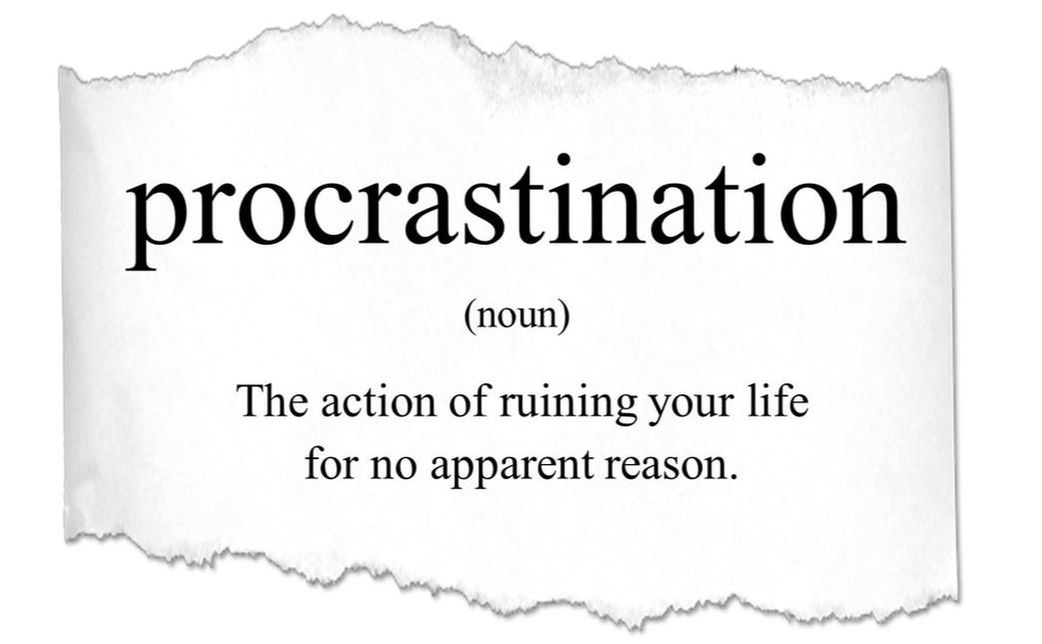
We all would like to be productive, to finish our work comfortably within deadlines, and free ourselves up to pursue the goals we have beyond whatever it is we have to do everyday. Our problem is that we allow rein to doubt, so that we feel justified in putting things off presently because we will be better prepared in the future. However, when the time comes we make the same argument and do so indefinitely, until we cannot possibly delay any longer. At that point we have recourse to the excuse that if the result is not perfect it was because we did not try that hard and, while this is clearly our fault, it allows us to think that if we had done more we would have approximated that standard better.
Nevertheless, our preoccupation with perfectionism conceals a hidden aspect that guides procrastination. What we are really after is freedom from judgement. The things we procrastinate around generally have criteria by which they can be judged. We don’t procrastinate around walking or listening to music because we aren’t judged on those activities. The prospect of being judged (negatively) causes us anxiety that we would like to be free of but, because no work we do that is imperfect will be spared from it, we aspire to an illusory perfection that would put us beyond scrutiny. That is why, for example, we put off writing essays; there is a standard by which we are judged and the only way to escape it is through perfect work.
However, this strains us because, try though we might, nothing we ever do will be perfect. How well we perform is ultimately a matter of indifference if it is perfection we are after, because improvements can invariably be made. The solution to procrastination may then lie in accepting that we are going to be judged and being comfortable with this so that we can begin the work as earnestly as we can. If people are going to say something about what you do, invite them to it, but don’t for a second think twice about doing it for fear of judgement. The only way to avoid judgement is to do nothing, say nothing and be nothing; in a word, to cease existing.
Recognising this, that procrastination achieves its aim only by doing the impossible, by attaining perfection or obscuring us from judgement, see the doubt for what it is. In that context it is perfectly rational – we can’t ensure those things. The problem is that the aims set by perfectionism are absurd. The only way past procrastination is then to reassess our goals. If we are to achieve our potentials and live our lives to fulfillment we have to give up aspiring to perfection, which is nothing less than a neurosis. Even more simply if we are struggling to start it is helpful to realise that something is always better than the nothing we would end up doing.







 🄰🄳🄸
🄰🄳🄸 